Sagging, Overflow, and Fastener Problems: Gutter Warning Signs in Okahumpka
In Okahumpka, gutters do not get much of a break. Long rainy stretches, humid weather, summer debris, and storm season can expose weak spots fast. A gutter system that looked fine in spring can start spilling water over the edge by midsummer, especially after pine needles, oak leaves, and roof grit collect in the troughs and downspouts.
Most homeowners notice the obvious warning signs first. Water pours over the front lip during a hard rain. A section starts to dip in the middle. A spike or screw backs out. Maybe there is a downspout elbow that drips every time a storm rolls through. None of those issues should be brushed off as normal wear. In Florida conditions, small gutter problems often become bigger drainage problems quickly.
What matters is not just the gutter itself, but where that water ends up. When gutters overflow, runoff can fall right beside the foundation, wash mulch away, soak planting beds, and leave muddy splash marks along walls. Debris that sits in gutters can also wash into storm drains and waterways. Local maintenance guidance in Florida has long emphasized keeping gutters and storm drains clear of leaves, needles, and organic buildup, especially during the wet season.
If you live in or around Okahumpka and are trying to decide whether your gutters need cleaning, repair, or full replacement, the signs below are worth taking seriously.
Overflow is usually the first thing people see
Overflow is the complaint that gets the most attention because it happens in real time. You hear heavy rain on the roof, look outside, and instead of seeing water move cleanly into the downspouts, you see sheets of water dropping over the sides.
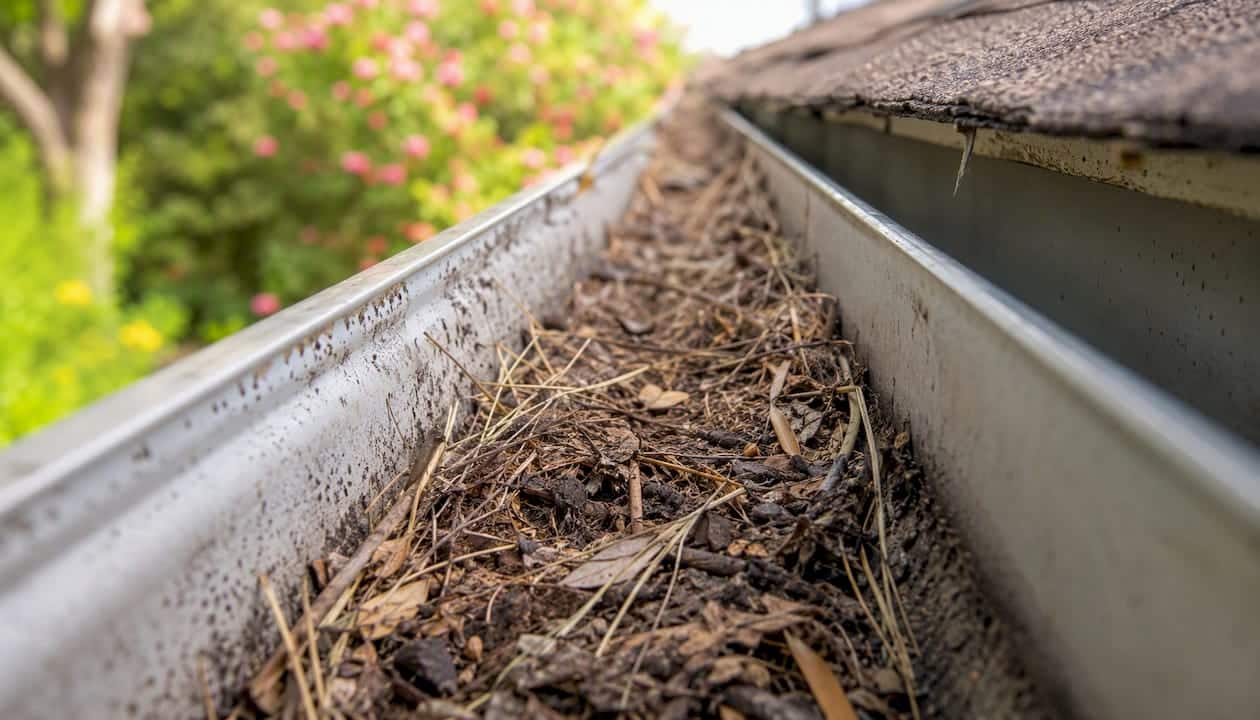
Sometimes the reason is simple. The gutter is packed with pine needles or matted leaves. Florida yards can produce a surprising amount of debris even when trees are not directly over the roof. Wind carries oak leaves, acorns, twigs, and roof grit into open gutters. Pine needles are especially tricky because they tangle together, trap shingle granules, and form dense little dams near outlets. That is one reason homeowners often ask about gutter guards for pine needles Florida, but guards are not magic. They can reduce buildup in some situations, yet they still need inspection and occasional cleaning, particularly where fine debris accumulates.
Other times, overflow is not only a cleaning issue. It may signal a slope problem, a crushed section, or downspout restriction. Water can enter the gutter just fine but fail to move toward the outlet at the speed a Florida downpour demands. During a mild rain, that weakness may stay hidden. During a summer storm, it shows itself immediately.
This is where context matters. In many Florida homes, gutter sizes for Florida homes are not a one-size-fits-all decision. Roof shape, collection area, number of valleys, and downspout layout all affect how much water a system can handle. If overflow happens only at one corner, that points you toward a local blockage or pitch issue. If it happens along long runs every time there is heavy rain, it may be worth asking whether the original system was sized appropriately and whether the downspouts are doing enough work.
Sagging gutters are more than a cosmetic problem
A little dip in a gutter run can look harmless from the ground. It is not. Sagging means the system is no longer carrying water as intended. Water pools in low spots, debris settles there, and extra weight builds with every storm. In humid weather, that trapped organic matter stays wet longer, which makes the gutter harder to flush clean and puts more strain on the fasteners.
In practice, sagging usually comes from one of three conditions working together. The gutter has held standing water for too long. Debris has added weight. The hangers or other fasteners have loosened or corroded enough that the run is no longer supported evenly.
Florida code materials emphasize that gutters and downspouts should be securely fastened with corrosion-resistant fasteners. That point is easy to overlook until you see what happens when it is ignored. One failed attachment point can place extra load on the next one. Over time, a short section can begin to bow outward or twist. Once that starts, water rarely flows cleanly again without repair.
A sagging run near a roof valley deserves special attention. Valleys can send a concentrated rush of water into one section of gutter, and if that section already holds standing debris, it becomes a stress point. I have seen homeowners focus on the spot where the drip becomes visible, only to find the real cause ten feet away where the gutter had dropped just enough to hold a muddy, compacted mass of leaves and grit.
Loose fasteners are the quiet warning sign
Fastener problems often develop before homeowners notice any overflow. A screw backs out slightly. A hanger loosens. A downspout strap starts to separate from the wall. None of this looks dramatic at first, but each loose connection changes how the system carries weight and channels water.
This is especially important in a region that gets repeated wet-dry cycles, wind, and storm preparation demands. Gutters are not decorative trim. They are working components that need secure attachment. If you can see a gap opening between the back of the gutter and the fascia, or if a section rattles during rain or wind, that is a repair issue, not a wait-and-see issue.
Fasteners also tell you something about the age and maintenance history of the system. A few isolated loose points can often be corrected during a focused gutter repair Wildwood FL style service call, meaning a practical repair rather than a full replacement. On the other hand, if multiple sections are pulling away, the metal is distorted, and the old attachment points no longer hold firmly, repair may not last. At that stage, homeowners often start comparing patchwork fixes with the cost of gutter replacement Gainesville FL contractors commonly recommend when the substrate or system integrity is failing across several runs.
Downspouts can be the real problem
People naturally look at the horizontal gutters first because that is where overflow is visible. But the downspouts often decide whether the whole system works. If water cannot exit efficiently, the gutter above them fills up, even when the trough itself is reasonably clean.
Downspout drainage Newberry FL concerns come up for good see more reason across this broader part of the state. A downspout that discharges too close to the home, clogs at the elbow, or connects poorly to a drain path can leave you with chronic wet spots. In a hard rain, that backup can push water up into the gutter run and create spillover far from the real blockage.
A practical inspection usually starts with simple questions. Does water actually emerge from every downspout during rain? Does one outlet lag behind the others? Do you see staining or splash marks under only certain corners of the house? Is one area of soil staying saturated long after the storm has passed? Those clues often reveal more than the gutter profile itself.
There is also an environmental housekeeping angle here. Florida maintenance guidance encourages keeping organic debris out of gutters and storm drains because runoff can carry that material into waterways. Oak leaves, acorns, and other yard waste do not just disappear once they wash out. That is one reason routine clearing matters beyond protecting the house.
Pine needles and oak leaves create a Florida-specific headache
Not every gutter problem in Okahumpka is unique, but the debris mix certainly feels familiar across Central Florida. Pine needles slide into the troughs and knot together around outlets. Oak leaves flatten when wet and form a dense mat that traps smaller particles. Acorns add weight and can settle at low points. Once this blend sits through repeated rain, it becomes harder to remove with a quick rinse.
Homeowners who stay ahead of this usually do one thing consistently. They clean or have the system cleaned before peak storm periods and again as needed during the season. That lines up with Florida storm-prep guidance that specifically calls for clearing needles, leaves, and other debris from roofs and gutters.
If you have ever put off gutter cleaning Fruitland Park FL style work because the gutters looked “not too bad” from the driveway, you already know the trap. What appears to be a light layer on top can hide dense muck around the outlets. By the time overflow becomes visible, the cleanup is usually messier and the chance of hidden fastener or pitch problems is higher.
Gutter guards can help in the right setting, but judgment matters. On some homes, guards reduce the volume of larger leaves entering the trough. On others, especially where fine needles dominate, surface buildup still needs regular attention. The right question is not whether guards eliminate maintenance. It is whether they make maintenance more manageable for the debris pattern on your property.
Material and profile choices affect long-term performance
When a system needs more than a simple cleanup or minor reattachment, homeowners usually start asking what to install next. That is where material and shape come into the conversation.
Aluminum gutters Central Florida homeowners choose are common for good reason. They are widely used, and when paired with proper fastening and sizing, they can serve well in wet climates. What matters most is not the buzzword on the estimate, but whether the installation fits the roof and discharge needs of the home.
You will also hear a lot about seamless gutters Ocala FL providers and nearby contractors offer. The appeal is straightforward. Fewer joints along long runs can mean fewer places for leaks and separation to start. That does not solve every issue, but it can reduce one common failure point, especially on homes where older sectional gutters have begun leaking at seams.
Profile matters too. K-style gutters Lady Lake FL homeowners often recognize by name are a familiar residential option, partly because they fit many home styles and handle runoff efficiently when sized and installed correctly. But no profile can overcome bad slope, poor fastening, or neglected downspouts. The shape is only one part of a larger drainage plan.
If you are weighing repair against replacement, the smart move is to think in terms of performance rather than marketing terms. Ask how the system will manage roof runoff in heavy seasonal rain. Ask how the downspouts will discharge. Ask what maintenance the design expects from you.
A short homeowner check after a rain tells you a lot
You do not need to climb a ladder to spot most warning signs. The best time to assess gutters is during or right after a steady rain, when the system is actually under load.
- Look for water spilling over the front or back edge instead of entering the downspouts cleanly.
- Check whether any section appears to bow, dip, or hold standing water after the rain tapers off.
- Notice loose screws, separated straps, or gaps between the gutter and the fascia.
- Watch where the downspouts discharge and whether water pools near the house.
- Scan the ground for concentrated washout, mulch displacement, or repeated splash marks.
That five-minute walk can tell you whether you are dealing with routine maintenance or the start of a structural problem.
Repair or replacement depends on how many issues overlap
One loose hanger by itself is not a replacement case. A downspout clog is not a replacement case. Even a leaky seam may not be. But once sagging, overflow, fastener failure, and poor drainage begin stacking on top of each other, patching can become expensive without truly fixing the problem.
This is where homeowners benefit from honest evaluation. A targeted gutter repair Wildwood FL type of service makes sense when the system is fundamentally sound and the issue is localized. Maybe one corner is dropping. Maybe one downspout is blocked. Maybe a short run needs refastening and cleaning.
Replacement becomes easier to justify when the failures are systemic. Imagine an older setup with multiple sagging runs, recurring clogs, visible separation from the fascia, and water discharging poorly during every major storm. At that point, the labor spent chasing each symptom can rival the value of a fresh system designed for current conditions. That is why conversations about gutter replacement Gainesville FL homeowners have often start with frustration over repeat service calls rather than one dramatic collapse.
There is also the timing issue. If your gutters are barely hanging on at the start of storm season, postponing work can be risky. Storm ready gutters Florida homeowners want are not just clean. They are secure, properly draining, and able to handle prolonged rain without pulling loose.
When to call a contractor instead of treating it as weekend maintenance
Some problems are safe to monitor from the ground. Others deserve professional attention sooner rather than later, especially if the home has multiple roof levels or the fascia may already be affected by water.
A good time to call is when you see any of these conditions:
- Repeated overflow after cleaning, which suggests sizing, pitch, or downspout issues.
- Sagging sections that hold water or visibly pull away from the house.
- Loose or failing fasteners in several locations, not just one isolated point.
- Downspouts that back up, leak at joints, or dump water where it creates persistent pooling.
- Uncertainty about whether repair will last, especially before storm season.
This is also where hiring a gutter contractor Florida homeowners can trust becomes important. You want someone who can explain what they see in plain language. Not someone who automatically pushes full replacement, and not someone who shrugs off obvious warning signs with a quick reseal and a promise.
What a solid evaluation should include
A proper gutter evaluation should connect the visible symptom to the actual cause. If a contractor only talks about the section that overflows but never discusses slope, debris pattern, downspouts, or fastening, that is incomplete. The same goes for someone who recommends larger gutters without explaining why the present system struggles.
On Florida homes, the best assessments usually look at the whole water path. That means roof runoff entering the gutter, movement through the gutter run, exit through the downspout, and discharge away from the home. It also means discussing debris load honestly. Homes with frequent pine needle buildup need a different maintenance conversation than homes mostly dealing with broadleaf litter.
The contractor should also respect the fact that code-related details matter. Gutters and downspouts need to be sized and discharged in accordance with applicable building requirements, and they need secure, corrosion-resistant fastening. Even if you are not asking for a technical lecture, those fundamentals should guide the work.
Keeping gutters functional through Florida’s wet months
Most gutter trouble in Okahumpka does not start with one dramatic event. It builds through neglect, debris accumulation, and hardware that slowly loosens until a heavy rain exposes everything at once.
That is why the best maintenance plan is usually simple and consistent. Keep debris from sitting in the system, especially in summer. Pay attention to pine needles, oak leaves, and acorns before they compact around outlets. Watch the downspouts during rain. Treat sagging and loose fasteners as early warning signs, not cosmetic quirks.
For many homes, that approach is enough to avoid expensive surprises. For others, especially where the existing setup was never draining well to begin with, the warning signs point toward a larger upgrade. Whether you are looking at aluminum gutters Central Florida installers commonly use, considering seamless gutters Ocala FL companies fabricate, or comparing K-style gutters Lady Lake FL homeowners often choose, the goal stays the same. You want a system that moves water reliably, stays securely attached, and can stand up to the rhythm of Florida weather.
If your gutters are spilling, dipping, or pulling loose now, they are already telling you something. The sooner you read those signs, the easier the fix usually is.
Corrections
Spot something wrong? Send it to the desk and it gets fixed in the open.